
A reflective, strategic guide to using ikigai as a career filter before becoming a wedding planner or wedding designer.

This guide is designed for ambitious future wedding professionals who want clear decisions, elegant execution, and a serious approach to building a career in the wedding industry.
Most readers exploring wedding planner ikigai have two needs at the same time: they want a clear explanation, and they want to know what a smart next step looks like. The article therefore starts with a direct answer, then moves into strategy, examples, professional standards, and gentle guidance for moving forward.
Why ikigai is useful before changing careers
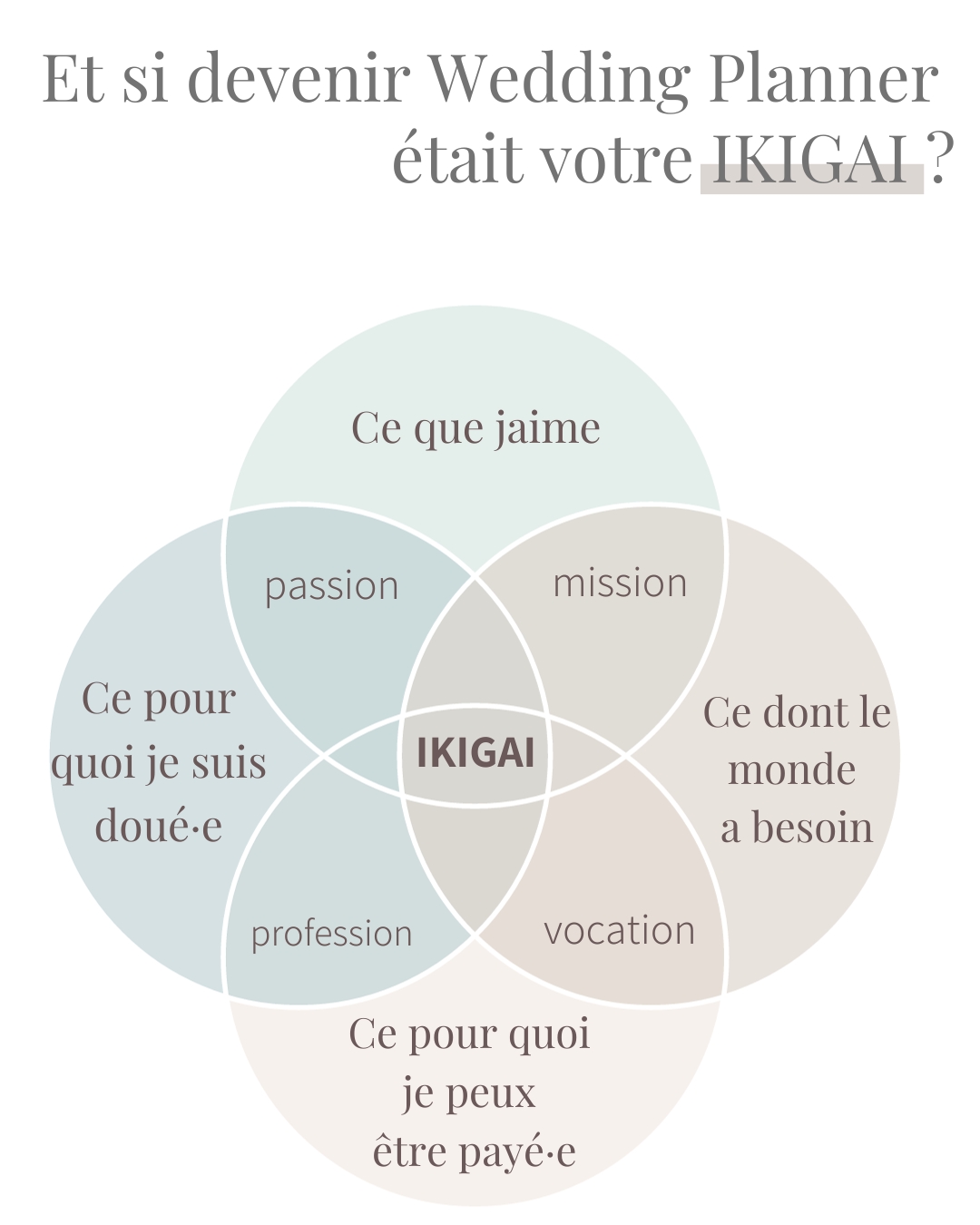
Wedding planner ikigai is not a poetic exercise; it is a decision-making framework. Many people feel drawn to wedding planning because they love beauty, emotion, organization, or meaningful celebrations. That attraction matters, but passion alone cannot carry a business. Ikigai helps you test whether the profession also matches your talents, the needs of the market, and your financial expectations.
This is especially valuable for future wedding planners and wedding designers because the job can look glamorous from the outside. Behind the scenes, it requires negotiation, logistics, emotional intelligence, commercial discipline, vendor coordination, and the ability to manage pressure. Ikigai creates a more honest conversation with yourself.
The four circles applied to wedding planning
The first circle is what you love. In this context, it may include design, human stories, hospitality, family celebrations, or the rhythm of event production. The second circle is what you are good at: organization, communication, aesthetics, budgeting, leadership, or problem-solving.
The third circle is what the market needs. Couples need reassurance, clarity, vendor guidance, planning timelines, wedding day coordination, and sometimes destination wedding expertise. The fourth circle is what can generate income. This requires pricing, positioning, offers, and the ability to attract clients. A wedding planner ikigai analysis becomes powerful when all four circles are examined together.
Passion is the starting point, not the business model
A love of weddings can motivate you, but it is not enough to define your offer. A professional wedding planner must transform emotion into a service. That means deciding whether you want to provide full planning, partial planning, wedding day coordination, wedding design, destination support, or a signature niche.
The more precise your offer becomes, the easier it is to evaluate whether the career fits you. Someone who loves creative styling may be more aligned with wedding design. Someone who thrives on logistics and people management may prefer planning and coordination. Ikigai helps separate admiration for the industry from professional suitability.
Market demand and personal meaning must meet
The wedding market is large, but it is also competitive. A career feels meaningful when your skills respond to a real need. Couples may need support because they lack time, want a premium experience, feel overwhelmed by vendors, or are planning across cultures and locations. Your role becomes valuable when your strengths meet one of those needs clearly.
This is why wedding planner ikigai should include market research. Look at local demand, competitor positioning, pricing levels, client expectations, and service gaps. Personal purpose becomes stronger when it is connected to a concrete audience.
Income potential and professional sustainability
The final question is whether the career can support the life you want. Wedding planning can become profitable, but it requires business thinking. You need to understand costs, seasonality, workload, sales cycles, marketing, and client acquisition. Ikigai does not ignore money; it includes money as one of the conditions for long-term fulfillment.
A meaningful career that creates constant financial stress will eventually lose its magic. A premium learning pathway can help future planners connect purpose with pricing, service design, and operational confidence.
Key points to remember about wedding planner ikigai
- Write what genuinely attracts you to wedding planning without editing yourself.
- List the skills you already have and the skills that still need structured development.
- Research what couples in your target market actually need and are willing to pay for.
- Define a first service offer that connects your strengths with a clear client problem.
- Estimate pricing, workload, marketing needs, and the number of clients required to reach your goals.
- Use the results to decide whether to move forward, adjust your niche, or train first.
A refined approach to wedding planner ikigai also means using the right vocabulary. In a premium wedding context, a program is not just a collection of lessons; it is a structured pathway. Support is not simple assistance; it is guidance that helps the learner make better decisions. Wedding planning is not only organization; it is the art of designing a client experience that feels calm, precise, and emotionally intelligent.
The same topic naturally connects to related professional ideas such as wedding planner course, professional retraining, wedding business strategy, client experience, planning timeline, vendor coordination, and wedding day coordination. Using this broader vocabulary makes the article richer for readers and more precise for anyone comparing their options.
How to turn this knowledge into action
Reading about wedding planner ikigai is useful only if it leads to a clearer decision. The next step is to translate the information into a personal plan: where you are now, what you need to learn, which resources you already have, and what kind of support would help you move forward with confidence.
For a future wedding planner, action does not have to be dramatic. It can begin with a skills audit, a funding check, a market observation exercise, a conversation with a school, or a first draft of a service offer. Small structured steps are more reliable than vague motivation.
Common mistakes to avoid
- Treating ikigai as a personality test instead of a strategic reflection.
- Ignoring income potential because the profession feels emotionally meaningful.
- Assuming every love of weddings should become a business.
- Skipping market research before choosing a niche.
- Comparing your path to established planners instead of evaluating your own strengths.
When structured guidance becomes valuable
Independent research is a strong starting point, but it can quickly become fragmented. A premium learning environment helps connect ideas into a coherent method. This is particularly important in wedding planning, where every decision affects the client experience: how the consultation is framed, how the quote is presented, how the budget is protected, how vendors receive instructions, and how the wedding day unfolds.
For learners who want a more guided path, a professional program such as WedSKILLS can provide structure, vocabulary, operational tools, and a clearer business mindset. The purpose is not to remove the learner’s personality. It is to give that personality a reliable professional framework.
Useful resources connected to wedding planner ikigai
For readers who want to continue researching wedding planner ikigai, these original resources remain useful because they connect the strategy in this article with practical next steps and specialist references.
- ikigai definition for wedding professionals
- wedding planner career guide
- wedding planner ikigai
- ikigai reference
- personal development for wedding entrepreneurs
- wedding market research guide
- wedding planner business plan
- WedSKILLS wedding planner program
- wedding planner pricing guide
- wedding planner ikigai
- how to become a wedding planner
Final perspective
Wedding Planner Ikigai: How to Know Whether This Career Is Truly Aligned With You is ultimately about making a more informed professional choice. The wedding industry rewards creativity, but it also rewards preparation, reliability, emotional intelligence, and business clarity. When those elements come together, a future planner can move from admiration of the profession to a credible and premium client service.
The most important decision is not only whether the topic interests you. It is whether you are ready to approach it as a professional. That means learning the language of the industry, understanding client expectations, and building systems that protect both the couple’s experience and your own long-term growth.
A stronger way to evaluate your next step
One practical way to continue is to create a one-page decision map for wedding planner ikigai. Write the goal at the top, then divide the page into skills, funding, timing, market, personal constraints, and support. This simple exercise reveals whether the next action should be research, training, an admission request, a funding check, or direct market testing.
Another useful exercise is to imagine the first client conversation you want to have. What would the client ask? What would you need to explain? Which parts of wedding planner ikigai would help you answer with confidence? This brings the topic out of theory and into professional reality.
Quality criteria for a premium wedding career
A premium wedding career is built on details that clients may not see immediately but feel throughout the process. Clear communication, thoughtful timelines, careful vendor selection, elegant boundaries, and calm decision-making create the sense of safety that high-value clients expect.
Whether the topic is funding, skills, books, jobs, or career alignment, the same standard applies: knowledge must become behavior. A planner becomes credible when information is translated into a repeatable method that serves the couple before, during, and after the wedding day.
How to decide with confidence
Someone exploring wedding planner ikigai is often looking for reassurance as much as information. A strong decision comes from clarity without pressure, depth without heaviness, and encouragement without unrealistic promises.
Additional professional checkpoints
- Define the exact result you expect from exploring wedding planner ikigai.
- Identify the people, platforms or institutions that can validate your next step.
- Separate emotional motivation from operational preparation.
- Create a realistic timeline with one decision point and one action point.
- Review whether your current skills match premium client expectations.
- Choose learning resources that give structure, not only inspiration.
- Keep evidence of your progress so your project becomes easier to explain.
FAQ
What does wedding planner ikigai mean?
It means applying the four ikigai areas to the wedding planner career: passion, skills, market need, and income potential.
Can ikigai reveal that wedding planning is not right for me?
Yes. That is useful information. It may show that you prefer wedding design, event styling, hospitality, or a different creative business.
Should I do market research before training?
Yes. Market research helps you understand client expectations and choose a program that supports a realistic professional direction.
Is ikigai enough to start a business?
No. It is a reflection tool. A business plan, pricing strategy, legal setup, marketing and operational training are still necessary.
How does a course help with career alignment?
A structured course gives visibility into the real work behind the profession, which helps confirm or refine your decision.