Wedding Entrepreneurship and Personal Development: Building a Business with Meaning
A reflective guide for future wedding planners, designers, and officiants who want to build a business that is both meaningful and sustainable.
PublishedRead 9 minBy Anne-Marie MECHERI
Wedding entrepreneurship is often born from a personal quest. Many future planners, designers, and celebrants are not only looking for a job; they are looking for work that feels more aligned with their values, creativity, and desire to serve others during meaningful moments.
That search for meaning is powerful, but it can also create pressure. When a business is tied to identity, every client decision, quote, rejection, or comparison can feel personal. Personal development helps separate the value of the person from the performance of the business.
Why is personal development important for wedding entrepreneurs?
Personal development matters for wedding entrepreneurs because the business is deeply connected to identity, confidence, emotional boundaries, success, and meaning. A wedding planner or designer who understands their needs and motivations can make clearer decisions, communicate better with clients, and build a more sustainable professional path.
Wedding entrepreneur reflecting on personal development and business purposeWedding planner journaling about meaning success and entrepreneurship
This guide explores how personal development can support wedding entrepreneurs without replacing practical training, business strategy, or professional discipline.
Personal development as a foundation for entrepreneurship
Personal development is not a luxury reserved for quiet seasons. For entrepreneurs, it influences the way they make decisions, manage fear, define success, communicate with clients, and protect their energy.
Understanding your motivation
Some people are drawn to wedding entrepreneurship because they love celebration and beauty. Others seek autonomy, creativity, recognition, flexibility, or a sense of purpose. Knowing your motivation helps you build a business that supports your real needs instead of copying someone else’s model.
Clarifying your definition of success
Success may mean revenue, visibility, premium clients, creative freedom, a calmer lifestyle, meaningful work, or the ability to support a family. If you do not define success yourself, the market, social media, and competitors will define it for you.
Building emotional boundaries
Wedding professionals work with clients during emotional decisions. Without boundaries, empathy can become over-involvement. Personal development helps you care deeply while still preserving your time, energy, and professional role.
Recognizing limiting beliefs
Thoughts such as “I am not legitimate, “I cannot charge that much, or “I must say yes to be liked’ can shape business decisions. Noticing these beliefs is the first step toward choosing differently.
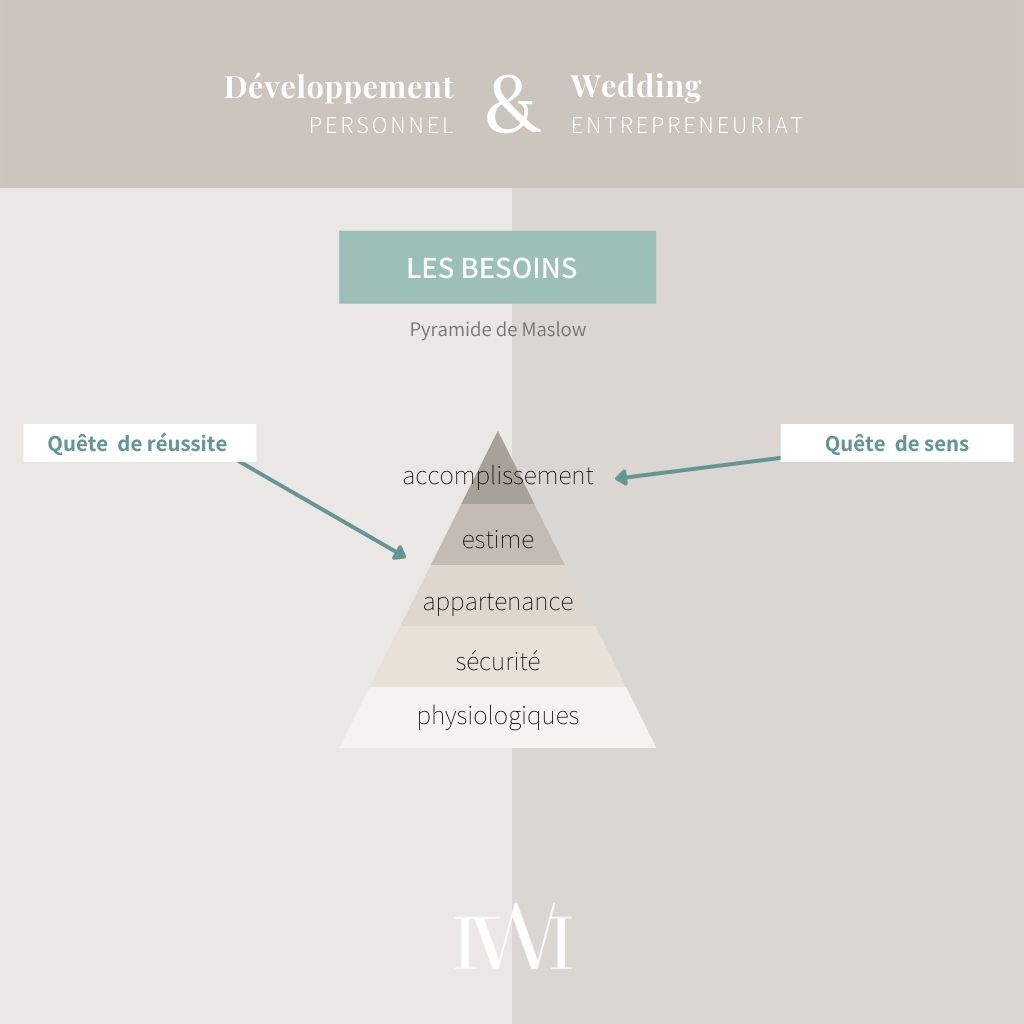
Between the quest for success and the quest for meaning
Wedding entrepreneurs often move between two powerful desires: achieving visible success and creating work that feels meaningful. Both can be healthy, but each one becomes fragile when it is disconnected from self-awareness.
The quest for success
This quest can include revenue, recognition, strong branding, press features, a beautiful portfolio, premium clients, or business growth. It becomes constructive when it is connected to strategy and values rather than comparison or constant urgency.
The quest for meaning
This quest is about purpose, contribution, beauty, service, creativity, and personal alignment. It becomes sustainable when it is supported by pricing, boundaries, and business structure. Meaning without profitability can become exhausting.
Different needs at different moments
At one stage, you may need reassurance and training. Later, you may need visibility, a stronger offer, or better boundaries. Personal development helps you identify what you need now instead of following generic advice.
Preventing burnout through awareness
Burnout can appear when ambition, client pressure, perfectionism, and emotional involvement accumulate. Awareness helps you notice early signs: resentment, fatigue, loss of creativity, avoidance, or the feeling that every request is urgent.
Using reflection as a business tool
Journaling, mentoring, reading, supervision, or honest conversations with peers can reveal patterns. Reflection becomes professional when it leads to practical changes in pricing, communication, calendar, or client selection.
Questions for wedding entrepreneurs to ask themselves
What does success mean for me beyond social media visibility?
Which client situations drain me, and what boundary could prevent them?
What type of wedding work gives me energy rather than only pressure?
Where am I underpricing because I fear rejection?
Which business decision am I postponing because it feels uncomfortable?
What support, training, or guidance would help me move forward with more clarity?
Using personal development without losing professional structure
Personal development should not become an excuse to avoid concrete business work. The most helpful approach connects self-awareness with action: clearer offers, better communication, healthier boundaries, and more realistic goals.
Turn insight into decisions
If you discover that you fear conflict, create clearer contracts and email templates. If you realize you need more meaning, refine your ideal client and services. If you notice comparison, define your own success metrics.
Protect the business from emotional over-identification
A rejected proposal does not mean you are not talented. A difficult client does not mean the business is failing. Emotional distance helps you learn from situations without turning every outcome into a personal judgment.
Create routines that support stability
Regular planning, financial review, rest, reading, movement, and learning create a base from which creativity and service can thrive. Wedding seasons are demanding; routines help prevent every week from becoming reactive.
Combine inner work with professional training
A wedding entrepreneur needs both self-awareness and competence. Personal development can clarify the path, while training provides the tools to walk it with confidence.
How to apply this guidance in a premium wedding business
The search intent behind wedding entrepreneurship and personal development is rarely purely theoretical. Readers usually want to understand the topic, evaluate whether it applies to their own project, and decide what to do next. For a premium wedding professional, the strongest response is to transform information into a visible client experience: clearer pages, better conversations, more precise offers, and a calmer planning process.
Audit your current level of clarity
Start by reviewing how clearly you can explain this subject to a client, learner, or vendor. If your explanation of wedding entrepreneurship and personal development changes every time you speak, the offer or method probably needs refinement. Write the explanation in one paragraph, then remove vague words until the value becomes obvious.
Create a simple decision path
Premium guidance is not about overwhelming someone with every possible option. It is about helping them move from uncertainty to a thoughtful decision. Present the essential criteria first, then add nuance, examples, and professional recommendations so the reader feels supported instead of pushed.
Connect the topic to real wedding situations
A strong article should always return to practical reality. Explain how wedding entrepreneurship and personal development affects timelines, budgets, communication, client expectations, vendor collaboration, creative choices, or business confidence. This connection is what turns general advice into expertise that feels credible.
Review and improve after each season
The wedding industry evolves through experience. After each season, revisit your content, tools, and service language. Keep what helped clients understand you faster, remove what created confusion, and add the details that would have made your last project smoother.
Semantic angles to strengthen search visibility
To support SEO without forcing keywords, build a semantic cluster around related ideas such as wedding entrepreneurship, personal development wedding planner, wedding business mindset, purpose, burnout prevention, wedding planner career. These connected terms help search engines understand the depth of the topic while giving readers a more complete and useful guide.
Informational intent
Informational searches come from readers who are trying to understand what wedding entrepreneurship and personal development means, why it matters, and what mistakes to avoid. Answer these questions with definitions, examples, checklists, and clear explanations before introducing any offer or recommendation.
Comparison and decision intent
Decision-focused readers compare options. They want to know what is serious, what is superficial, what is worth paying for, and which path fits their situation. This is where transparent criteria, boundaries, and professional judgment create trust.
Soft conversion intent
Soft conversion happens when a reader feels understood enough to take the next step naturally. Instead of pushing, guide them toward a course, a consultation, a checklist, or a deeper resource only after the article has already delivered genuine value.
Quality indicators to monitor over time
A useful article about wedding entrepreneurship and personal development should become easier to understand each time it is updated. Monitor whether readers spend time on the page, whether inquiries become more precise, whether the vocabulary matches real client questions, and whether the content still reflects the standards of a premium wedding business.
Reader confidence
The best sign of quality is not only traffic. It is the quality of the next conversation. When readers arrive with clearer questions, more realistic expectations, and a better understanding of your approach, the content is already supporting your business before the first call begins.
Mistakes to avoid in wedding entrepreneurship
Romanticizing the profession
Weddings are beautiful, but the job includes pressure, logistics, admin, negotiation, and difficult decisions.
Using passion to justify overwork
Passion should not erase rest, pricing, boundaries, or profitability. A meaningful business still needs to be sustainable.
Comparing your beginning to someone else’s maturity
Established professionals often show polished results, not years of learning, uncertainty, and adjustment. Comparison can distort your own timeline.
Building a wedding business that supports your life
If personal development helps you understand why you want this career, a <a href="https://internationalweddinginstitute.com/">wedding planner and designer training</a> can help you understand how to build it professionally: method, tools, communication, planning, coordination, and business strategy.
Selected resources and references
The following resources are kept as clean, relevant anchors so the article preserves its reference value while remaining easy to read.
It is the process of building a business in the wedding industry, such as wedding planning, wedding design, officiating, coordination, or a related vendor service.
Why does personal development matter for wedding planners?
It supports confidence, boundaries, motivation, emotional resilience, and better communication with clients and vendors.
Can personal development replace business training?
No. Personal development supports mindset, while business training and professional education provide methods, tools, and operational skills.
How can I avoid burnout as a wedding entrepreneur?
Define boundaries, price sustainably, plan rest, choose clients carefully, create processes, and notice early signs of emotional overload.
How do I know whether I am seeking success or meaning?
Look at what motivates your decisions. If you mostly seek recognition, visibility, or growth, success may be central. If you seek purpose, alignment, and contribution, meaning may be central. Most entrepreneurs need a balance of both.
Continue exploring the blog
Return to the IWI blog to read more resources for wedding planners, wedding designers and modern wedding professionals.