The 4 Roles of a Wedding Planner: Consultant, Manager, Vendor, Entrepreneur
Understand the four professional roles behind wedding planning and how each one shapes training, services, and business positioning.
PublishedRead 9 minBy Anne-Marie MECHERI
The wedding planner profession is often described as one job, but in practice it contains several roles. A planner advises, manages, sells, coordinates, creates systems, and builds a business. Understanding these roles helps future professionals choose the right training and present their services with more authority.
The four-role view is especially useful because it prevents confusion between inspiration and professional reality. Loving weddings is a starting point, not a job description. The profession requires consulting expertise, wedding management, commercial clarity, and entrepreneurial thinking.
What are the four roles of a wedding planner?
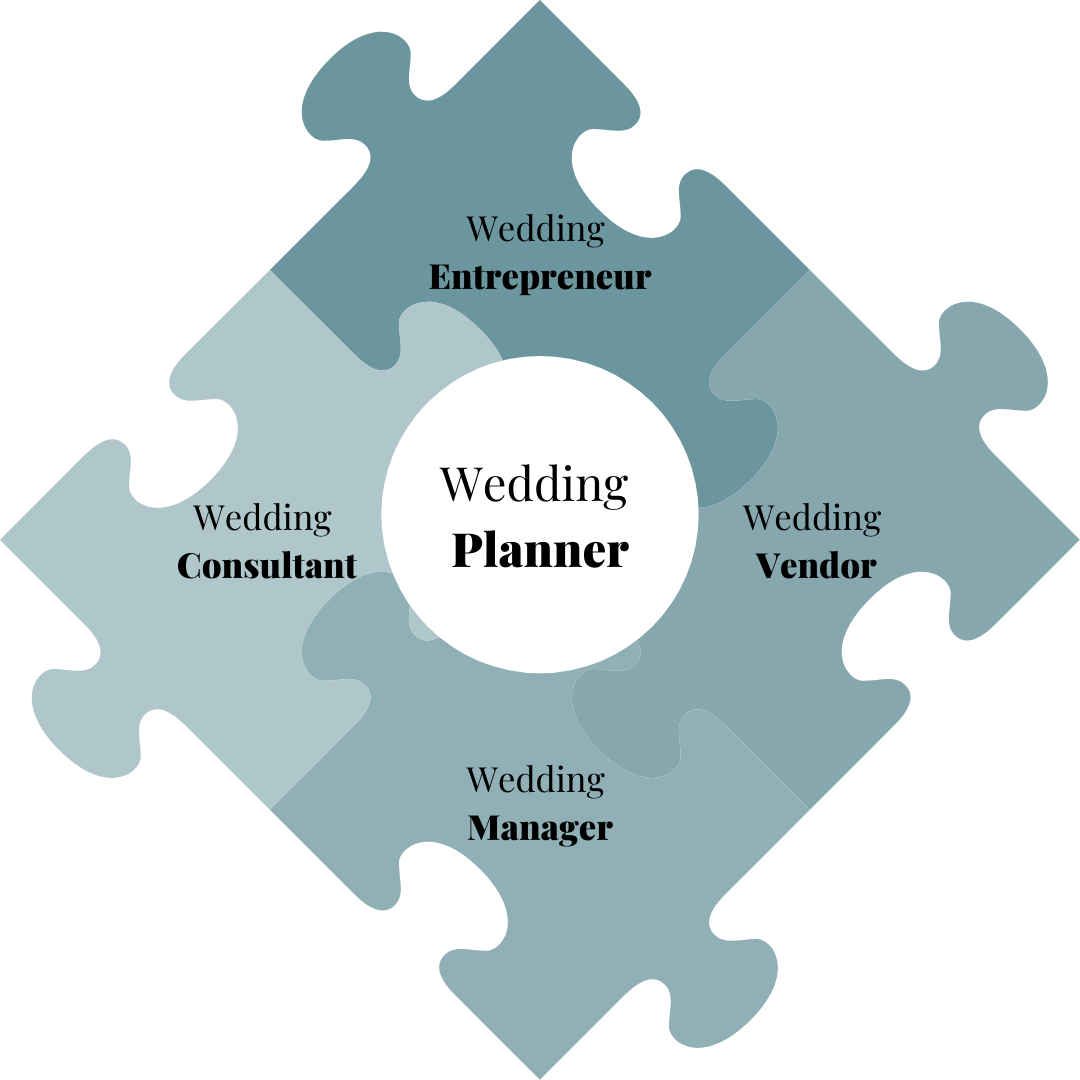
The four roles of a wedding planner are Wedding Consultant, Wedding Manager, Wedding Vendor, and Wedding Entrepreneur. Together, they describe the planner’s ability to advise couples, manage the wedding project, sell and package services, and build a sustainable independent business.
Four wedding planner roles framework consultant manager vendor entrepreneur
This framework gives future wedding planners a clearer understanding of what they are learning and why each skill area matters.
Why one title can hide several professional responsibilities
A couple may simply say they need a wedding planner, but behind that request are many needs: advice, reassurance, vendor selection, budget guidance, planning timeline structure, event logistics, and day-of leadership. One professional may carry all of those responsibilities, or different people may specialize in different parts of the process.
Role 1: the Wedding Consultant
The Wedding Consultant informs, explains, guides, recommends, suggests, and advises. This role is knowledge-based and relational. It requires the ability to clarify options for couples who are often overwhelmed by choices.
A strong consultant understands venues, ceremonies, catering, entertainment, guest experience, budget limits, timelines, and family dynamics. Consulting is not about having an opinion on everything. It is about helping the couple make decisions that are coherent, realistic, and aligned with their celebration.
Role 2: the Wedding Manager
The Wedding Manager is the project manager of the wedding. This role turns ideas into an organized process. It includes defining the scope, identifying tasks, assigning responsibilities, monitoring deadlines, preparing coordination documents, and managing changes.
Wedding management is particularly important because weddings involve many stakeholders: the couple, families, guests, vendors, venues, and sometimes cultural or religious representatives. The manager keeps the project readable for everyone.
Role 3: the Wedding Vendor
The Wedding Vendor role refers to the commercial side of the profession. A planner also sells a service, responds to inquiries, presents proposals, negotiates, signs contracts, and ensures satisfaction. Understanding this role helps future planners avoid underpricing or vague offers.
Role 4: the Wedding Entrepreneur
The Wedding Entrepreneur builds the activity around the service. This includes brand identity, positioning, visibility, financial management, partnerships, processes, and long-term development. Without this role, a planner may have talent but no sustainable structure.
How the four roles shape a premium training path
A serious wedding planner course should not focus only on organization. It should help learners understand where consulting ends, where management begins, how the commercial offer is built, and how an independent business becomes viable.
The four roles also help learners identify their natural strengths. Some future planners are excellent consultants because they listen deeply and explain clearly. Others are strong managers because they love structure. Some are commercially confident, while others need to build this skill gradually.
The consulting process
Consulting can be broken down into stages: informing, explaining, guiding, recommending, suggesting, and advising. These actions may sound similar, but they create different levels of involvement. A premium planner knows when to educate the couple and when to step back so the decision remains theirs.
The management process
Wedding management moves through understanding, designing, planning, organizing, and coordinating. It requires tools but also judgment. A timeline is useful only when it reflects reality: vendor constraints, guest movement, weather plans, transport, setup time, and emotional moments.
The commercial process
Selling a wedding planning service is not aggressive when it is done professionally. It is the art of making value visible. Couples need to understand what is included, how the process works, what the planner prevents, and why the service fee reflects expertise.
The entrepreneurial process
Entrepreneurship turns a role into a business. It asks for systems, boundaries, communication standards, and a clear vision of the clients the planner wants to serve. This is where brand identity and operational excellence meet.
Using the roles to position your services
A new planner can use this framework to decide what to offer first. Some may begin with wedding day coordination, then expand into full planning. Others may specialize in consulting sessions, destination logistics, vendor sourcing, or support for another agency as a freelance Wedding Manager.
Resources to continue learning
The following references from the original article are preserved on relevant anchors so the article keeps its SEO value and gives readers a clear path for deeper learning.
The four roles appear at different moments of the client journey. During the first inquiry, the Wedding Vendor and Wedding Entrepreneur roles are visible because the planner must explain the offer, qualify the request, and communicate positioning. During the first consultation, the Wedding Consultant role becomes central. During planning, the Wedding Manager role takes over through timelines, vendor follow-up, and risk management.
On the wedding day, the roles overlap. The planner may guide the couple, manage the schedule, coordinate the venue team, answer vendor questions, and protect the brand reputation through every interaction. The client simply experiences calm professionalism, but behind that calm are several skill families working together.
Why beginners should not skip the commercial role
Many future wedding planners feel comfortable studying planning documents but uncomfortable studying sales. Yet the commercial role is not optional. Without the ability to present an offer, answer objections, explain fees, and sign clear agreements, the planner cannot protect the quality of the service.
The commercial role is also a form of client care. A clear proposal reduces misunderstandings. A transparent scope prevents frustration. A professional contract sets expectations before emotions rise. Selling well is not opposed to serving well; it supports the service.
How the framework helps with specialization
Understanding the roles can also guide specialization. A professional who loves strategy and conversation may offer consulting sessions for couples who want expert guidance without full planning. A planner who loves logistics may become a freelance Wedding Manager for agencies. A business-minded professional may focus on building a full-service planning company.
This flexibility is valuable in the modern wedding industry. Not every wedding planner has to follow the same path. The key is to choose a positioning that matches skills, market demand, lifestyle, and long-term ambition.
A premium planner integrates all four roles with restraint
Premium service does not mean showing every role to the client at every moment. Often, the best work is invisible. The couple feels guided, but not overwhelmed. They feel the planning is structured, but not rigid. They understand the offer, but do not feel pressured.
That balance comes from maturity. The planner knows when to consult, when to manage, when to sell, and when to think as a business owner. The four roles become a quiet internal compass.
Questions to ask when identifying your strongest role
Ask yourself where energy appears naturally. Do you enjoy clarifying complex information for people? The Wedding Consultant role may feel intuitive. Do you feel satisfied when tasks, timelines, and responsibilities are organized? The Wedding Manager role may be a strong fit.
If you enjoy presenting offers, negotiating, and refining the client journey, the Wedding Vendor role deserves attention. If you think constantly about brand, systems, growth, and independence, the Wedding Entrepreneur role may be where your long-term development will happen.
The purpose is not to choose only one role forever. It is to understand your entry point. A clear entry point makes training easier and helps you build confidence while developing the other areas.
How agencies and freelancers use the framework differently
A wedding agency may distribute the four roles across several people: one person handles sales, another manages planning, another coordinates the day, and the founder develops the business. A freelance planner often carries all of those responsibilities alone, at least at the beginning.
This is why the framework is so useful for freelancers. It reveals the invisible workload behind the title and encourages future professionals to build systems rather than relying only on personal energy.
For SEO and service positioning, the four roles also create a strong semantic cluster. A website can speak about wedding consulting, wedding project management, wedding day coordination, wedding business, and freelance wedding management without sounding repetitive. Each phrase reflects a real part of the profession.
That semantic clarity helps future clients understand the service and helps learners understand why the profession deserves structured education. The title may be simple, but the work behind it is layered.
Frequently asked questions
Why separate the wedding planner profession into four roles?
Separating the profession into four roles makes the work clearer. It shows that a wedding planner is not only an organizer but also a consultant, project manager, service provider, and entrepreneur.
Can one person occupy all four roles?
Yes. Independent wedding planners often occupy all four roles, especially when they advise couples, manage projects, sell services, and run their own business.
Which role should a beginner learn first?
A beginner should understand all four roles but may start with consulting and wedding management because these directly shape client experience and event quality.
How does this help with training?
It helps evaluate whether a course covers the whole profession. A premium wedding planner program should include consulting, planning, coordination, commercial structure, and business development.
Continue exploring the blog
Return to the IWI blog to read more resources for wedding planners, wedding designers and modern wedding professionals.