
Choosing a legal structure is rarely the most glamorous part of launching a wedding business, but it is one of the most important. It influences invoicing, taxes, liability, administration, credibility and the way the business can grow. For wedding planners, designers and officiants, the choice should support both the present launch and the future ambition.
A premium wedding business needs more than a beautiful name and a polished website. It needs a professional foundation. The legal structure helps define how the activity exists, how it earns money and how it protects the person behind the brand.

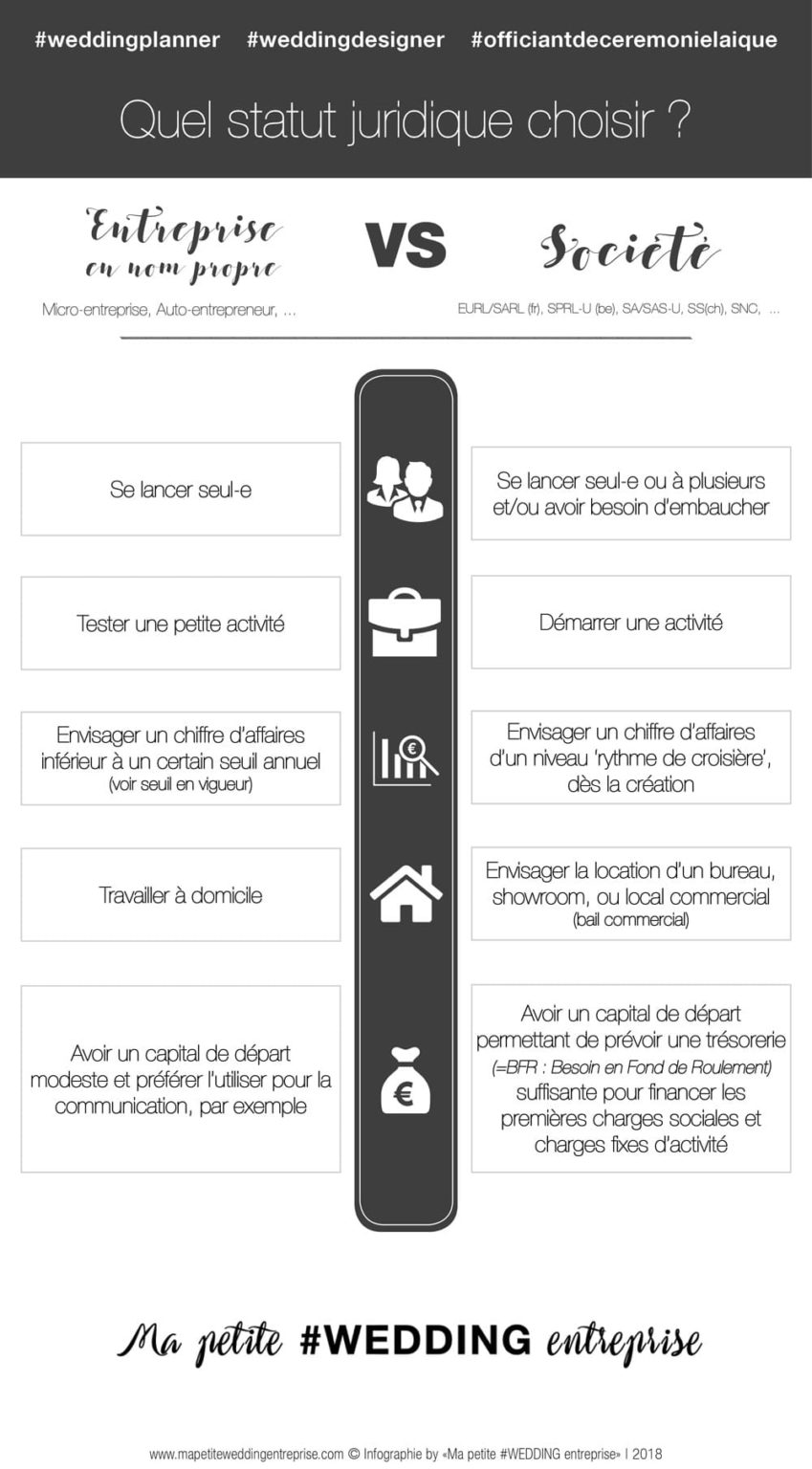
Why wedding professionals need a formal business structure
Wedding planners, designers and officiants work with clients, suppliers, deposits, contracts, event deadlines and emotional expectations. Even when the business begins small, it is still a professional activity. A legal structure makes it possible to invoice properly, sign contracts, declare income and organize responsibilities.
Some future professionals imagine that they can begin informally and regularize later. That approach can create confusion, especially if a client signs, a supplier asks for billing details or an event requires insurance. Starting with a clear structure helps the professional appear credible and protects the client relationship.
The legal choice also affects the way the business is perceived. A premium wedding business should not feel improvised. Clients entrust important sums and sensitive decisions to the professional, so formal clarity supports trust.
Key criteria before choosing a structure
The first criterion is revenue expectation. A small launch with limited turnover may not need the same structure as a business designed to manage multiple weddings, sell design production, hire assistants or work internationally. The second criterion is risk. Wedding day coordination, decor installation, rentals and supplier management can create different levels of exposure.
Administrative comfort also matters. Some legal structures are easier to manage but may have limitations. Others offer more flexibility or protection but require stronger accounting and reporting. The best choice is not always the simplest; it is the one that matches the professional’s goals and capacity.
Future wedding entrepreneurs should also think about long-term development. Will the business remain a solo activity? Could it become an agency? Will it sell products, rentals or educational content? Will it employ staff or collaborate with freelancers? These questions help avoid choosing a structure that becomes restrictive too quickly.
- Expected revenue and growth potential.
- Personal liability and protection of private assets.
- Administrative obligations and accounting needs.
- Tax treatment and social contributions.
- Plans for partnerships, employees, rentals or international work.
Micro-business, sole trader or company: the strategic logic
A simplified structure can be attractive for testing the market. It may reduce administrative pressure and help the professional begin faster. However, it can also create limits in turnover, expense deduction or perception depending on the jurisdiction. It should be chosen with a clear understanding of its advantages and constraints.
A company structure can offer a more robust framework for growth. It may be useful when the business expects higher revenue, significant expenses, a team, shared ownership or stronger separation between personal and professional finances. It can also be more credible for partnerships or premium positioning, though credibility should never be based on structure alone.
There is no universal answer. The right legal structure for a wedding planner business depends on the full project: services, pricing, risk, country, personal situation and ambition. Professional advice from an accountant or legal expert is often a wise investment before registration.
How legal structure connects to pricing and contracts
The legal structure influences pricing because taxes, social charges, insurance, accounting and administrative time affect profitability. A wedding planner who calculates only visible event hours may underprice the service. The business must also cover preparation, communication, legal obligations, training, marketing and the quieter months of the year.
Contracts should be aligned with the chosen structure. The business name, registration details, payment terms, tax information and liability clauses must be coherent. This is another reason to prepare the legal foundation before presenting offers to clients.
For wedding designers, the legal structure may also interact with inventory, rentals, supplier purchases and installation risks. For officiants, it may affect travel expenses, ceremony writing services and cross-border work. Each activity needs its own practical review.
Avoid choosing only for speed
Many future wedding professionals want the fastest option because they are eager to launch. Speed is useful, but it should not replace analysis. A structure that seems easy at the beginning may become limiting if the business grows quickly or if expenses are higher than expected.
Another common mistake is copying another professional’s choice. Two wedding planners can have the same title and completely different business models. One may coordinate a few local weddings per year; another may manage luxury destination weddings with a team and complex supplier contracts. Their legal needs may not be the same.
A structured course or business support can help learners ask the right questions before meeting an accountant or legal professional. Understanding the business model first makes the expert conversation far more useful.
Building a professional foundation
A legal structure is not a guarantee of success, but it is a foundation for serious work. It supports contracts, bank accounts, invoices, insurance, taxes and professional credibility. Once the structure is chosen, the wedding entrepreneur can focus more confidently on the offer, brand and client acquisition.
The best decision is usually the one that fits the current stage while leaving room for growth. A wedding business can evolve, and the legal structure can sometimes evolve with it. What matters is to begin with clarity rather than avoidance.
How to turn this into a working decision
The most valuable way to use this guidance is to turn it into a decision-making document, not a vague intention. For future wedding entrepreneurs choosing a business structure, a strong legal structure for wedding planner business approach should translate into written choices: what will be offered, what will be refused, what will be delegated, what will be measured and what will be improved after each client experience. This is how a beautiful idea becomes a professional standard.
Premium positioning also depends on consistency. A wedding planner, designer or officiant can have a refined visual identity, elegant copywriting and a clear promise, yet still lose credibility if the operational choices behind the business are improvised. The objective is to align the visible brand with the invisible structure: pricing, process, communication rhythm, client boundaries and post-event review.
What premium clients quietly evaluate
Couples rarely evaluate a wedding professional only through a list of services. They also assess calm, precision, discretion, confidence and the ability to make complex decisions feel simple. That is why legal structure for wedding planner business is not only a technical subject; it influences the emotional experience of the client relationship from the first enquiry to the final follow-up.
For an international or high-end audience, the difference is often in the details. Clear documents, thoughtful explanations, realistic timelines and polished language reassure clients before they have seen the full result of the work. They suggest that the professional knows how to protect the couple’s investment, respect the event’s emotional value and manage pressure with elegance.
How to keep improving after the launch
The first version of any wedding business decision will evolve. After each season, the professional should review what created value, what created friction, which conversations took too much energy and which clients felt aligned with the brand. This reflective habit makes legal structure for wedding planner business stronger over time because it connects strategy to real market feedback.
A useful review can remain simple: compare enquiries with signed clients, compare planned hours with real hours, review the moments where couples needed the most reassurance, and identify which part of the offer generated the strongest testimonials. These signals help refine pricing, messaging, services and education choices without losing the premium spirit of the brand.
The mindset behind sustainable growth
Sustainable growth in the wedding industry is rarely built through urgency alone. It comes from a clear method, a refined client experience and the patience to develop expertise before trying to scale. The professionals who last are usually the ones who understand both sides of the work: the beauty that clients see and the structure that makes that beauty possible.
For students, this is where a premium course can make the difference. It does not replace personal responsibility, but it gives a framework, vocabulary and professional discipline. Instead of collecting disconnected tips, learners can build a coherent way of thinking about legal structure for wedding planner business, client trust and long-term business value.
Useful resources and further reading
The original French article included several useful references. They are preserved here with clearer, English-language anchor text so readers can continue their research without breaking the flow of the article.
- how to become a wedding planner
- wedding planner course
- wedding planner career profile
- wedding officiant career profile
- wedding branding strategy
- wedding planner course
- wedding planner course
- wedding business market research
- free wedding business learning access
- steps to create a wedding business
- le statut auto-entrepreneur
- wedding planner course
Frequently asked questions
Can a wedding planner start as a micro-business?
In some countries or legal systems, a simplified micro-business structure can be possible for a first launch. The suitability depends on turnover limits, expenses, taxes, liability and the exact services offered.
Is a company structure better for premium positioning?
Not automatically. Premium positioning comes from service quality, clarity and brand consistency. A company structure may support growth, but it does not replace professional standards.
Should wedding designers choose a different structure from planners?
Sometimes. Wedding designers may have higher material costs, rentals, logistics and installation risks, which can influence the best legal structure.
Do I need professional advice before choosing?
Professional advice is strongly recommended because legal, tax and liability rules vary by country and personal situation. An accountant or legal expert can adapt the decision to the project.
A refined next step
Choosing a legal structure for a wedding planner business is a strategic step. It gives the future professional a credible foundation and helps transform a creative project into a real company with boundaries, obligations and room to grow.