How to Create a Wedding Planner Website with WordPress: 10 Elegant Theme Ideas
A premium guide to building a wedding planner website that inspires trust, presents your services clearly, and supports long-term SEO visibility.
PublishedRead 12 minBy Anne-Marie MECHERI
Creating a wedding planner website is not only a design project. It is a strategic business decision. Your website is often the first place a couple evaluates your taste level, your professionalism, your planning method, and your ability to understand the atmosphere they want for their celebration.
For a future wedding planner or a newly established agency, WordPress can offer the right balance between flexibility, autonomy, and premium presentation. With the right theme, a thoughtful structure, and search-friendly content, a website can become more than a digital brochure: it can become the foundation of your brand authority.
What should a wedding planner website include to attract the right clients?
A strong wedding planner website should combine an elegant visual identity, clear service pages, proof of expertise, a simple inquiry path, and SEO-focused content. WordPress is often a practical choice because it gives wedding planners more control over design, publishing, technical structure, and long-term visibility than many closed website builders.
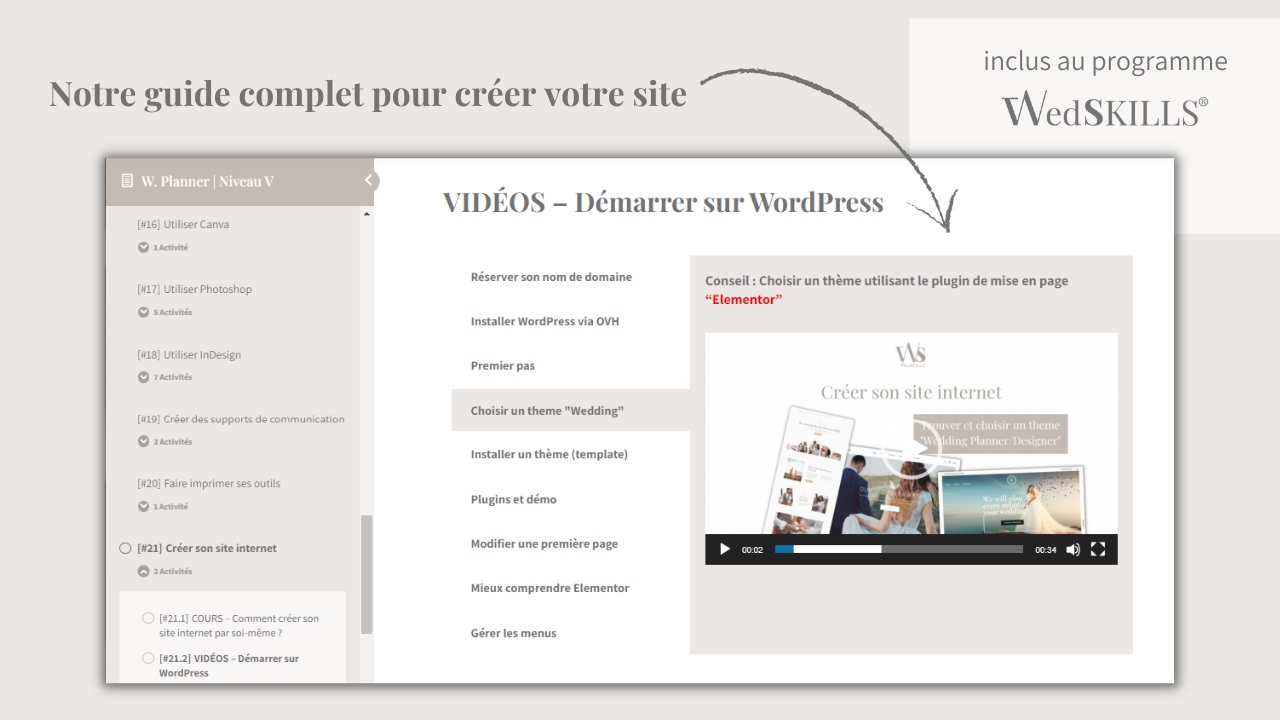
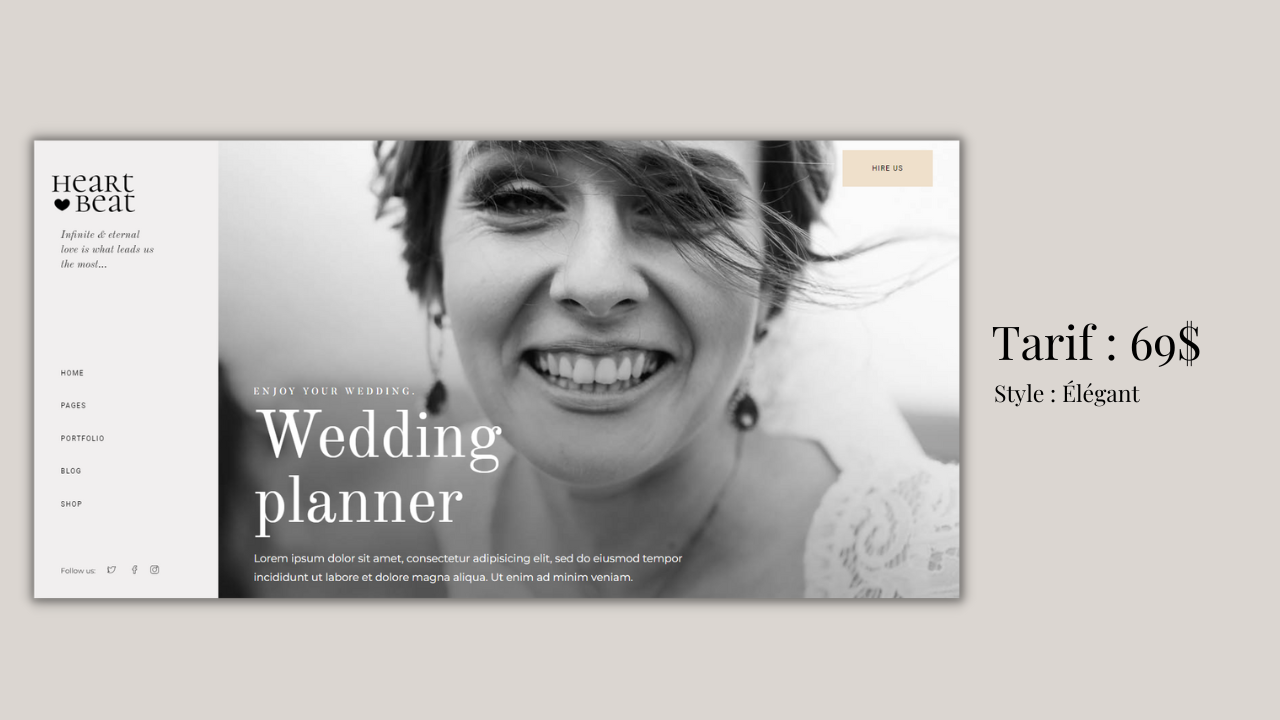
Wedding planner website design concept with elegant WordPress layoutWordPress theme preview for a premium wedding planner website
The goal is not to choose the prettiest template and fill it quickly. The goal is to create a wedding planner website that speaks to your ideal clients, guides them through your expertise, and gives Google enough clarity to understand what your business offers.
Why a wedding planner needs a credible website
In the wedding industry, trust is built before the first call. Couples are preparing an emotional, expensive, and highly personal event. They need to feel that the person behind the website is organized, reassuring, refined, and capable of handling complexity without turning the process into stress.
Show a professional identity before the first appointment
A premium website gives future clients an immediate sense of your positioning. Your typography, images, copy, service structure, and tone all communicate whether you are focused on intimate weddings, luxury destination celebrations, modern city events, or creative editorial design. This first impression matters because couples compare several planners before they decide who deserves a conversation.
Present services with clarity and elegance
Many new planners describe their work too vaguely. A strong wedding planner website explains the difference between full wedding planning, partial planning, wedding day coordination, design support, vendor sourcing, and bespoke guidance. When the offer is clear, visitors understand what they can ask for, and the inquiry process becomes more qualified.
Support your visibility on Google
A website also has a technical role. Google needs structured pages, relevant keywords, readable headings, and consistent content to understand your expertise. Publishing useful articles around wedding planning, coordination, vendor management, destination weddings, and budget organization creates a stronger semantic environment around your brand.
Create autonomy as your business evolves
A wedding planner website is never completely finished. Your offers change, your portfolio grows, and your positioning becomes more precise over time. WordPress allows you to update pages, add articles, refine SEO titles, and test landing pages without depending on a developer for every small change.
How to choose a WordPress theme for a wedding planning business
A beautiful WordPress theme is useful only if it supports your business model. Before choosing one, look at the structure behind the visuals. The best wedding planner theme is not always the one with the most animations; it is the one that helps visitors understand your value quickly.
Prioritize service pages over decorative effects
Wedding planners need pages that explain services, process, pricing direction, portfolio, testimonials, and contact details. If a theme looks impressive but hides these essentials behind complex animations, it may slow down the visitor journey. Premium design should feel effortless, not confusing.
Check mobile readability first
Many couples browse wedding vendors on their phones between appointments, during commutes, or while planning together in the evening. A theme must present images, menus, inquiry buttons, and service sections clearly on mobile. A refined desktop layout is not enough if the mobile experience feels crowded.
Choose flexible portfolio layouts
A wedding planner website needs visual storytelling. Look for theme sections that can present real weddings, moodboards, styled shoots, venue details, and behind-the-scenes planning work. Portfolio pages should show not only beautiful images, but also the role you played and the challenge you solved.
Keep SEO structure simple
Some themes add heavy code, unnecessary scripts, and confusing heading hierarchies. For SEO, choose a theme that lets you control H1, H2, meta titles, slugs, image alt text, and page speed. Search visibility comes from clarity, not from overloaded visual effects.
Think about brand longevity
A wedding planner website should still feel aligned with your brand after the first season. Avoid themes that are too trendy, too decorative, or too close to another vendor’s identity. Choose a flexible base that can mature with your positioning.
Key pages to create before launching
A homepage that explains who you help and what type of weddings you plan.
A services page with clear distinctions between planning, design, and coordination.
An about page that builds trust without becoming too personal or unfocused.
A portfolio page that explains your contribution to each wedding or editorial project.
A contact page with a simple inquiry form and a clear next step.
A blog section designed around wedding planning questions your ideal clients already search for.
Making the website feel premium without making it complicated
Premium does not mean adding more elements. In wedding planning, premium often means restraint, coherence, and precision. A website feels elevated when visitors can understand the offer without effort and when every detail supports the same brand story.
Write in a calm, confident voice
Couples do not only hire a planner for logistics. They hire emotional safety, discretion, anticipation, and taste. Your website copy should reflect that. Avoid overpromising, generic passion statements, or exaggerated claims. A calm voice often feels more luxurious because it suggests experience.
Use SEO keywords naturally
Terms such as wedding planner website, wedding planning services, wedding day coordination, luxury wedding planner, destination wedding planning, and wedding planner WordPress theme can appear naturally across the site. The objective is not to repeat one phrase mechanically. It is to build a coherent topic cluster around your expertise.
Turn your planning method into content
A strong blog can answer practical questions about timelines, vendor selection, wedding budgets, coordination, venue visits, and guest experience. These articles attract couples who are still researching and also demonstrate the depth of your professional method.
Design the inquiry path carefully
A premium contact form should collect enough information to qualify the request without feeling cold. Ask about date, location, guest count, type of support, and planning stage. Then explain what happens after submission so the couple feels guided from the first click.
How to apply this guidance in a premium wedding business
The search intent behind wedding planner website is rarely purely theoretical. Readers usually want to understand the topic, evaluate whether it applies to their own project, and decide what to do next. For a premium wedding professional, the strongest response is to transform information into a visible client experience: clearer pages, better conversations, more precise offers, and a calmer planning process.
Audit your current level of clarity
Start by reviewing how clearly you can explain this subject to a client, learner, or vendor. If your explanation of wedding planner website changes every time you speak, the offer or method probably needs refinement. Write the explanation in one paragraph, then remove vague words until the value becomes obvious.
Create a simple decision path
Premium guidance is not about overwhelming someone with every possible option. It is about helping them move from uncertainty to a thoughtful decision. Present the essential criteria first, then add nuance, examples, and professional recommendations so the reader feels supported instead of pushed.
Connect the topic to real wedding situations
A strong article should always return to practical reality. Explain how wedding planner website affects timelines, budgets, communication, client expectations, vendor collaboration, creative choices, or business confidence. This connection is what turns general advice into expertise that feels credible.
Review and improve after each season
The wedding industry evolves through experience. After each season, revisit your content, tools, and service language. Keep what helped clients understand you faster, remove what created confusion, and add the details that would have made your last project smoother.
Semantic angles to strengthen search visibility
To support SEO without forcing keywords, build a semantic cluster around related ideas such as wedding planner website, WordPress wedding planner theme, wedding planner SEO, wedding business, wedding planning website, WordPress for wedding planners. These connected terms help search engines understand the depth of the topic while giving readers a more complete and useful guide.
Informational intent
Informational searches come from readers who are trying to understand what wedding planner website means, why it matters, and what mistakes to avoid. Answer these questions with definitions, examples, checklists, and clear explanations before introducing any offer or recommendation.
Comparison and decision intent
Decision-focused readers compare options. They want to know what is serious, what is superficial, what is worth paying for, and which path fits their situation. This is where transparent criteria, boundaries, and professional judgment create trust.
Soft conversion intent
Soft conversion happens when a reader feels understood enough to take the next step naturally. Instead of pushing, guide them toward a course, a consultation, a checklist, or a deeper resource only after the article has already delivered genuine value.
Quality indicators to monitor over time
A useful article about wedding planner website should become easier to understand each time it is updated. Monitor whether readers spend time on the page, whether inquiries become more precise, whether the vocabulary matches real client questions, and whether the content still reflects the standards of a premium wedding business.
Reader confidence
The best sign of quality is not only traffic. It is the quality of the next conversation. When readers arrive with clearer questions, more realistic expectations, and a better understanding of your approach, the content is already supporting your business before the first call begins.
Website mistakes that weaken a wedding planner brand
Using too many visual styles
Mixing several fonts, colors, buttons, and image treatments can make a planner look less consistent. A refined website usually relies on a small number of visual decisions used with discipline.
Publishing service pages that sound generic
If your services could belong to any planner, they will not help couples choose you. Add your approach, your process, your standards, and the type of experience you want to create.
Forgetting the business objective
A website should lead visitors toward an inquiry, a discovery call, or a course application. Beautiful pages are not enough if the next step is unclear.
From website template to professional positioning
If you are still defining your services, brand positioning, and client journey, a structured path such as an <a href="https://internationalweddinginstitute.com/wedskills/programme-formation-wedding-planner-ligne.html">online wedding planner course</a> can help you understand how website content connects to real planning skills, client communication, and wedding business strategy.
Selected resources and references
The following resources are kept as clean, relevant anchors so the article preserves its reference value while remaining easy to read.
Is WordPress a good choice for a wedding planner website?
Yes. WordPress is a strong option when you want flexibility, SEO control, and the ability to evolve your website over time. It requires more attention than a very simple builder, but it gives a planner more room to grow.
How many pages does a wedding planner website need?
A useful first version can include a homepage, services page, about page, portfolio, blog, and contact page. Additional pages can be added later for destination weddings, wedding day coordination, press features, or specific locations.
Should a new planner use a ready-made theme?
A ready-made theme can be a smart starting point if it is adapted carefully. The key is to personalize the copy, images, service structure, and SEO settings so the website does not look generic.
What is the best SEO keyword for this type of website?
The core keyword depends on the market. A planner may target wedding planner in a city, luxury wedding planner, destination wedding planner, wedding day coordinator, or wedding planning services. The website should combine a main keyword with related terms.
Can a website replace social media for a wedding planner?
No. Social media can create visibility and connection, while a website provides structure, credibility, and searchable content. The strongest brands use both with a consistent message.
Continue exploring the blog
Return to the IWI blog to read more resources for wedding planners, wedding designers and modern wedding professionals.