
A wedding business brand name is often the first tangible sign that a project is becoming real. It appears on the website, contract, Instagram bio, proposal, invoices and conversations with suppliers. For wedding planners, designers and officiants, the name must carry both emotion and credibility.
Choosing the name is only the first step. A professional wedding entrepreneur should also check whether the name can be used safely and whether it deserves protection. Branding is creative, but it is also strategic and legal. A beautiful name loses value if it creates confusion or cannot be defended.
Start with strategy before brainstorming
A strong wedding business brand begins with positioning. Before writing lists of poetic words, the future professional should define the ideal client, the type of weddings served, the level of service, the tone of the brand and the emotional promise. A name that works for a luxury destination planner may not work for a modern urban officiant or a floral-focused wedding designer.
Brainstorming becomes more effective when it has direction. Words can come from atmosphere, values, geography, personal story, design language, ceremony symbolism or the client experience. The objective is not to find the most original word at any cost; it is to find a name that supports the brand’s future.
A premium name should be easy to pronounce, easy to remember and coherent in English if the business wants an international audience. It should also avoid being too narrow if the business may evolve. A planner who chooses a name tied only to local weddings may feel limited when destination work becomes possible.
Check availability before falling in love with the name
Once a shortlist is ready, the practical checks begin. Search the web, check social media handles, verify domain names and look for existing businesses with similar names in the same industry. This stage can feel frustrating, but it protects the project from costly rebranding later.
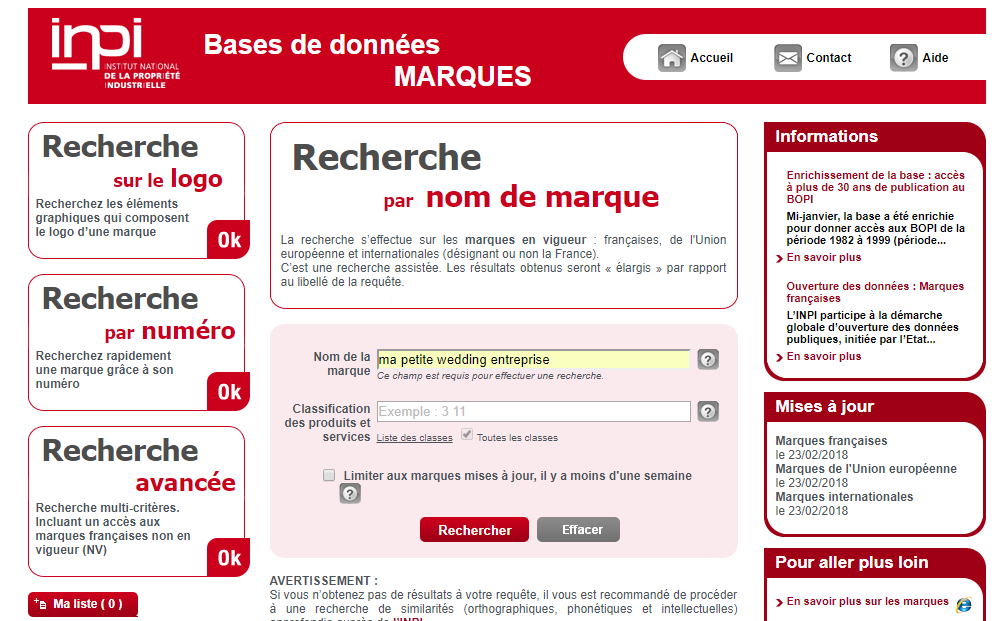
Trademark search is especially important. A name may be available on Instagram but already protected as a trademark. Depending on the country, the relevant database may be the INPI in France, the BOIP for Benelux, the Swiss Federal Institute of Intellectual Property, the Canadian Intellectual Property Office or another trademark office.
Future wedding professionals should also think about classes of goods and services. Trademark protection is organized by categories, and choosing the right classes matters. This is where professional legal advice can be useful, especially when the brand has growth potential.
- Search the exact name and similar spellings online.
- Check domain availability and social media handles.
- Review trademark databases in the relevant territory.
- Think about future services before choosing trademark classes.
- Keep evidence of searches and decisions for your records.
Protecting the brand is part of brand strategy
Protecting a wedding business brand does not mean becoming defensive or rigid. It means recognizing that the name, reputation and visual identity are business assets. As the company grows, the brand may attract clients, partners, media attention and educational opportunities. Protection helps preserve that value.
For a wedding planner or designer, the brand can also become a signature style. Clients may choose the professional because of the atmosphere associated with the name. For an officiant, the brand may communicate a tone of ceremony: intimate, modern, spiritual, inclusive or poetic. In each case, protection supports consistency.
How to make the name work in real life
A name should be tested in practical situations. Say it out loud during a client call. Place it on a proposal. Imagine it in an email signature, on a contract, in a podcast interview and on a venue recommendation list. If the name feels awkward in professional contexts, it may not be the right choice.
The name should also support SEO. A poetic name can be beautiful, but the website still needs clear language around wedding planner, wedding designer, wedding officiant, destination wedding planning, ceremony design or wedding day coordination. The brand name carries identity; the content explains the service.
This distinction is important. A brand can be elegant and memorable while the website remains clear and searchable. Premium does not mean vague. International clients especially need to understand quickly what the business offers and where it operates.
Common naming mistakes
One common mistake is choosing a name only because it sounds pretty. Beauty matters, but the name must also support the business model. Another mistake is choosing a name too close to a competitor. Even if it is legally possible, it can create confusion and weaken differentiation.
A third mistake is choosing a name that is difficult to spell. If clients cannot remember or search it, the brand loses visibility. A fourth mistake is waiting too long to check legal availability. The emotional attachment to a name grows quickly, which makes later changes harder.
The best approach is to combine creativity and discipline. Brainstorm freely, then evaluate rigorously. This is the same mindset future wedding professionals need in their client work: inspiration supported by structure.
From name to complete brand experience
Once the name is chosen, the brand must be developed through visuals, tone of voice, offers, client journey and professional documents. A name alone does not create a premium brand. It becomes powerful when every touchpoint expresses the same positioning.
This is why brand education is so valuable for wedding entrepreneurs. Students who understand branding can make smarter choices about names, logos, websites, social media, proposals and client communication. They learn to build a business that feels coherent rather than simply attractive.
How to turn this into a working decision
The most valuable way to use this guidance is to turn it into a decision-making document, not a vague intention. For future wedding entrepreneurs choosing a brand name, a strong protect wedding business brand approach should translate into written choices: what will be offered, what will be refused, what will be delegated, what will be measured and what will be improved after each client experience. This is how a beautiful idea becomes a professional standard.
Premium positioning also depends on consistency. A wedding planner, designer or officiant can have a refined visual identity, elegant copywriting and a clear promise, yet still lose credibility if the operational choices behind the business are improvised. The objective is to align the visible brand with the invisible structure: pricing, process, communication rhythm, client boundaries and post-event review.
What premium clients quietly evaluate
Couples rarely evaluate a wedding professional only through a list of services. They also assess calm, precision, discretion, confidence and the ability to make complex decisions feel simple. That is why protect wedding business brand is not only a technical subject; it influences the emotional experience of the client relationship from the first enquiry to the final follow-up.
For an international or high-end audience, the difference is often in the details. Clear documents, thoughtful explanations, realistic timelines and polished language reassure clients before they have seen the full result of the work. They suggest that the professional knows how to protect the couple’s investment, respect the event’s emotional value and manage pressure with elegance.
How to keep improving after the launch
The first version of any wedding business decision will evolve. After each season, the professional should review what created value, what created friction, which conversations took too much energy and which clients felt aligned with the brand. This reflective habit makes protect wedding business brand stronger over time because it connects strategy to real market feedback.
A useful review can remain simple: compare enquiries with signed clients, compare planned hours with real hours, review the moments where couples needed the most reassurance, and identify which part of the offer generated the strongest testimonials. These signals help refine pricing, messaging, services and education choices without losing the premium spirit of the brand.
The mindset behind sustainable growth
Sustainable growth in the wedding industry is rarely built through urgency alone. It comes from a clear method, a refined client experience and the patience to develop expertise before trying to scale. The professionals who last are usually the ones who understand both sides of the work: the beauty that clients see and the structure that makes that beauty possible.
For students, this is where a premium course can make the difference. It does not replace personal responsibility, but it gives a framework, vocabulary and professional discipline. Instead of collecting disconnected tips, learners can build a coherent way of thinking about protect wedding business brand, client trust and long-term business value.
Useful resources and further reading
The original French article included several useful references. They are preserved here with clearer, English-language anchor text so readers can continue their research without breaking the flow of the article.
- wedding planner course
- steps to create a wedding business
- wedding planner career profile
- wedding officiant career profile
- wedding designer career profile
- wedding branding strategy
- wedding business planning tools
- how wedding professionals find their first clients
- wedding planner training program
- WedSKILLS wedding business program
- INPI trademark office
- Benelux trademark office
- Swiss Federal Institute of Intellectual Property
- Canadian Intellectual Property Office
- INPI trademark office
- domain registration provider
- domain name search
- Google brand search
- INPI trademark office
- Nice Classification for trademark classes
Frequently asked questions
Do I need to trademark my wedding business name?
Trademark protection is not always mandatory, but it can be valuable if the brand is central to the business, if the name is distinctive, or if the company has growth ambitions.
Can I use a name if the domain is available?
Domain availability is not enough. You should also search existing businesses and trademark databases to reduce the risk of conflict.
Should my brand name include “wedding Planner’?
Not necessarily. The brand name can be poetic or personal, but the website and SEO content should clearly explain that you are a wedding planner, designer or officiant.
What makes a strong wedding brand name?
A strong name is memorable, aligned with positioning, easy to use, available in key channels and capable of supporting the business as it grows.
A refined next step
Choosing and protecting a wedding business brand is a founding decision. It gives the project a voice, a legal identity and a strategic direction. When creativity and verification work together, the brand becomes a stronger asset from the very beginning.